Nail Surgery
Nail surgery is a surgical procedure using local anaesthetic (an injection into your toe to numb it) to resolve in-growing or painful nails, and therefore carries the same risks as any other surgery.
We will attempt to answer all of your questions however, please feel free to ask the podiatrist about any other concerns you may have.
Nail surgery is a simple routine procedure carried out under local anaesthetic.
It is mainly used to treat painful in-growing toenails, curved nails or nails that are thick.
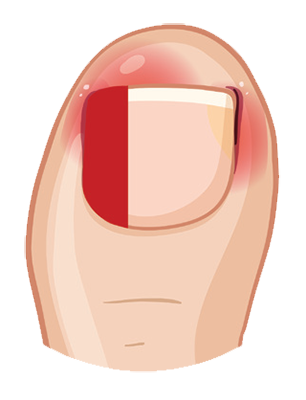
Having one side of your nail removed is called a Partial Nail Avulsion (PNA).
Your toe will be numbed using an injected local anaesthetic and a touriquet will be applied to stop your toe bleeding during the procedure.
One side of your toenail will be completely removed.
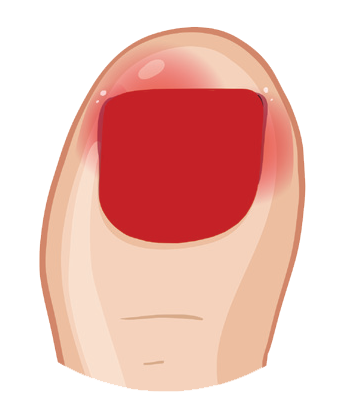
Having the whole nail removed is called a Total Nail Avulsion (TNA).
Your toe will be numbed using an injected local anaesthetic and a touriquet will be applied to stop your toe bleeding during the procedure. Your toenail will be completely removed.
Depending on what your goal is will determine whether Phenol is applied. This will be discussed by our Podiatrist at your assessment.
With Phenol
Advantages
- The part/whole nail isn’t expected to grow back
- For a PNA the remaining nail will remain
Disadvantages
- Your toe will take slightly longer to heal due
to the larger wound - The procedure will take slightly longer due to
the time taken to apply the Phenol - Your toe is more likely to become infected
after the operation – especially if there was
an infection there before
Risks
- Around 10% of patients experience some regrowth, although very few require a further procedure
Without Phenol
Advantages
- Your operation won’t take as long
- Your wound will heal more quickly
Disadvantages
- Your toenail will grow back again
Risks
- There is a very high probability your original problem will happen again
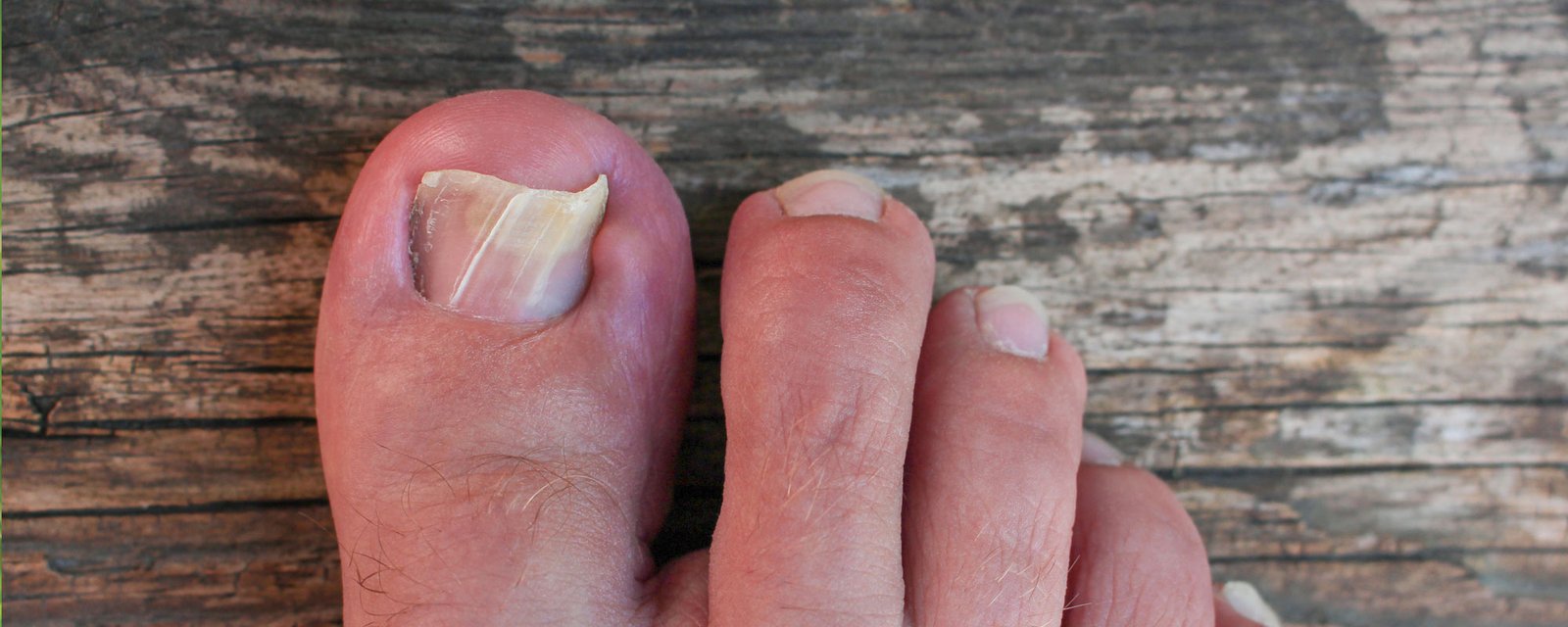
Possible Risks/ Things to Consider with Surgery
- There is a chance the nail may regrow. This regrowth is often not problematic but, in the few cases that regrow, the procedure can be repeated if needed.
- The toe may get infected, and you may require antibiotics from a doctor.
- Post-operative bleeding – it is important that you rest the foot and keep it elevated after the surgery.
- The appearance of the remaining nail may be altered.
- You may have an allergic reaction to the anaesthetic (anaphylaxis) which is extremely rare.
Possible Complications with Surgery
With any surgical procedure there may be complications, which you should be aware of with nail surgery, which might include:
- Re-growth: For a small percentage of patients the operation may not be successful and further treatment may be necessary.
- Infection: Very occasionally the toe may
become infected after surgery and may require antibiotic treatment. Your podiatrist will advise you if necessary. - Pain: There may be slight residual pain after the toe has healed, especially if tight shoes are worn.
- Loss of sensation: There may be prolonged numbness after the surgery, which usually resolves over time.
- Nail Deformity: For a small percentage of patients there can be some damage to the remaining nail after surgery.
- Skin Burns: There is a small risk of burning
to the surrounding skin, from the introduction
of the chemical used for cauterisation.
What does it Involve
- You will be given an injection of local anaesthetic. This will prevent any pain in the toe.
- The whole nail or the part of the nail that is causing the problem will then be removed and a chemical applied to the nail bed. This should prevent the nail from growing back.
- A bulky dressing will then be applied to your toe. Sandals, flip-flops, or slippers are the best footwear after surgery.
- Please remove nail varnish before surgery.
- You will be seen within 48 hours for re-dressing.
- The toe will take between 6 and 12 weeks to heal. During this time, it will be necessary for you to change the dressings as advised by your podiatrist.
- The anaesthetic will gradually wear off after a few hours. You may experience some pain or throbbing. Pain killers can be taken for this.
- Do not use aspirin or ibuprofen based pain killers as they can prolong the bleeding.
- You will need to organise a lift home after surgery as you will not safely be able to drive your car. Your car insurance will also be invalid as your toe/s will be numb.
- Once you are home we advise you to rest with your foot up for a minimum of 2 to 3 hours.
- The following day you will be able to walk and drive but you should relax as much as possible.
- Prolonged standing or walking may cause your toe to be more painful, but generally you will be well enough to go back to school or work the next day.
- For children under 17 years old a consent form must be signed by the parent or legal guardian before the surgery can be done.
- It is very important that you eat prior to your nail surgery. You may also like to bring a drink with you.
- Take your medication as prescribed unless advised otherwise.
Aftercare
You will be given:
- Follow-up appointment to instruct you on how
to look after your toe. - A small kit containing one week worth of dressings.
- It is advisable to refrain from high impact or contact sports or swimming, but you will probably be able to return to most normal activity the day after your first redressing appointment.

Despite previous treatments elsewhere, GP advice and a course of antibiotics there was no improvement until I visited Christchurch Foot Clinic. A huge thank you to Elodie, I can now walk comfortably again!
A name of someone here
foot care